The Power Bank You Actually Need, and Three You Don't
Capacity is the number everyone shops on and the one that matters least. Output wattage, port count and weight decide whether a power bank is useful.
By Asher Zev
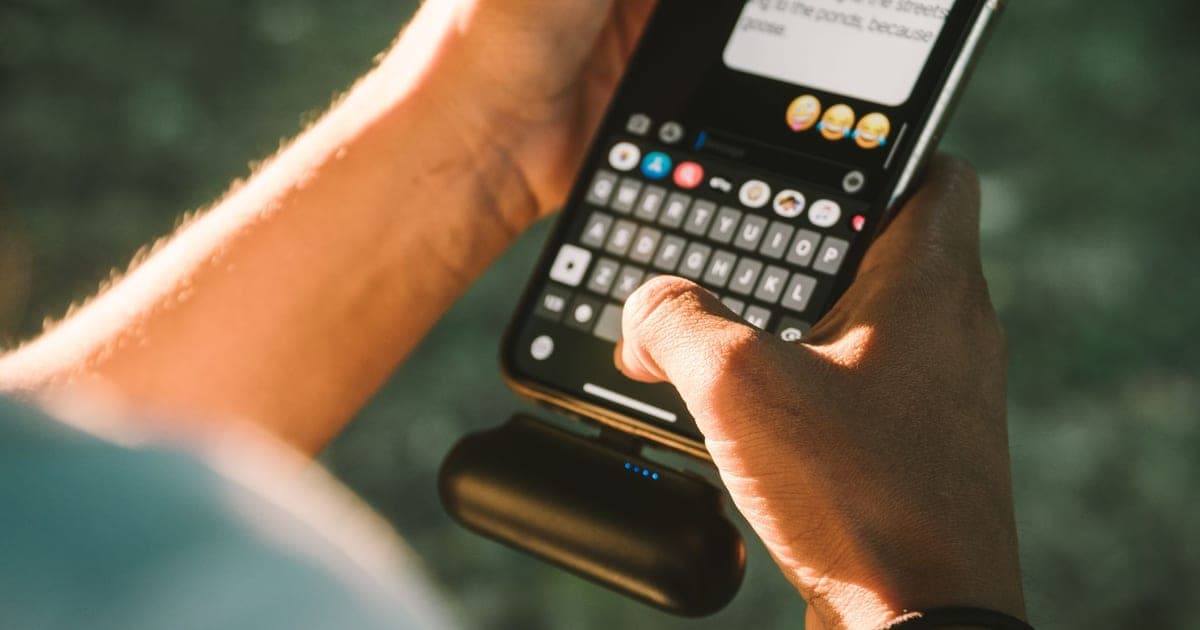
Every power bank listing leads with milliamp-hours, because it is the only specification that reliably goes up. It is also the specification least likely to determine whether the thing is useful to you.
Capacity tells you how much energy is stored. It says nothing about how fast that energy comes out, how many devices can draw from it at once, or whether you will actually carry it. Those three things decide the purchase.
Key takeaways
- Output wattage, not capacity, determines whether a power bank can charge a laptop at all.
- Above roughly 20,000mAh you are mostly buying weight — and airline rules cap you at 100Wh anyway.
- The pass-through and port-count details are where cheap units quietly fail.
Wattage decides what you can charge
A 25,000mAh brick that maxes out at 18W will charge a phone perfectly well and a laptop essentially not at all. A modern USB-C laptop wants 45W to hold steady under load and 65W or more to charge meaningfully while in use.
The rough tiers, which have been stable for a few years now:
- 20W to 30W — phones, earbuds, a handheld console slowly. Fine, and light.
- 45W to 65W — a 13-inch laptop, or a phone at full speed while something else charges.
- 100W and up — a 16-inch laptop under actual load, or three devices at once without throttling.
Check the per-port figure rather than the headline. A "100W" bank is frequently 65W on one port and 30W on another, and the total only appears when every port is occupied.
Capacity has a ceiling set by the airline, not the spec sheet
FAA rules in the US, and IATA rules almost everywhere else, cap lithium batteries in carry-on baggage at 100 watt-hours without prior airline approval. Since most banks run at 3.6V nominal, that works out at roughly 27,000mAh — which is why so many products stop just short at 25,000mAh.
Above 20,000mAh you are mostly buying grams. A 20,000mAh unit is around 350–400g (12–14oz), which is a laptop charger's worth of weight you have decided to carry all the time. For most people two full phone charges is the actual requirement, and 10,000mAh delivers that at half the mass.
What I would actually buy
The default: a 20,000mAh, 65W unit. Enough to refill a laptop once or a phone four times, fast enough to be useful mid-flight, and still under the airline limit. The Anker 737 is the reference point here — 24,000mAh, 140W, with a display that tells you the real remaining capacity rather than four ambiguous LEDs.
The light one: 10,000mAh, 30W. Fits a coat pocket, charges a phone twice, weighs about 200g (7oz). This is the one that gets carried, which makes it the one that gets used.
The charger, not the bank. If you are near power most of the day, a compact GaN wall charger solves the problem better than any battery. The UGREEN Nexode 140W replaces a laptop brick and two phone plugs at roughly the size of one of them.
For a mid-range option in between, the Baseus Blade 2 is the flat, laptop-shaped design worth considering if your bag has a sleeve rather than a pocket. Readers in the UK and EU should use the Amazon UK listing for the Anker — the US listing ships, but the duty and the return window make it a worse deal than the local price.
The three to skip
- Anything above 30,000mAh sold for travel. It is over the carry-on limit, and you will be having a conversation at the gate.
- Solar power banks. The panel area on a pocket device generates a trickle. Eight hours of direct sun for a partial phone charge is a camping accessory, not a charging strategy.
- Sub-$20 no-brand units with headline capacity. Rated capacity and delivered capacity diverge sharply at the bottom of the market, and the protection circuitry is the thing being economized on.
The checks before you buy
- Wattage per port, not the combined total.
- Whether the bank recharges over USB-C at a sensible rate — 30W in means two hours, 10W means most of a day.
- Weight in grams, stated plainly. If a listing hides it, that is the answer.
- Watt-hours printed on the casing, which is what gate agents look for.
- Pass-through support, if you travel with one plug.
None of this is exotic, but almost all of it sits below the fold on a product page, underneath the number that matters least.