Datacenter Power Is Quietly Becoming a Consumer Story
Grid connection queues and long-term power agreements read as an infrastructure story. Retail electricity pricing is where they surface next, and that is a household one.
By Asher Zev
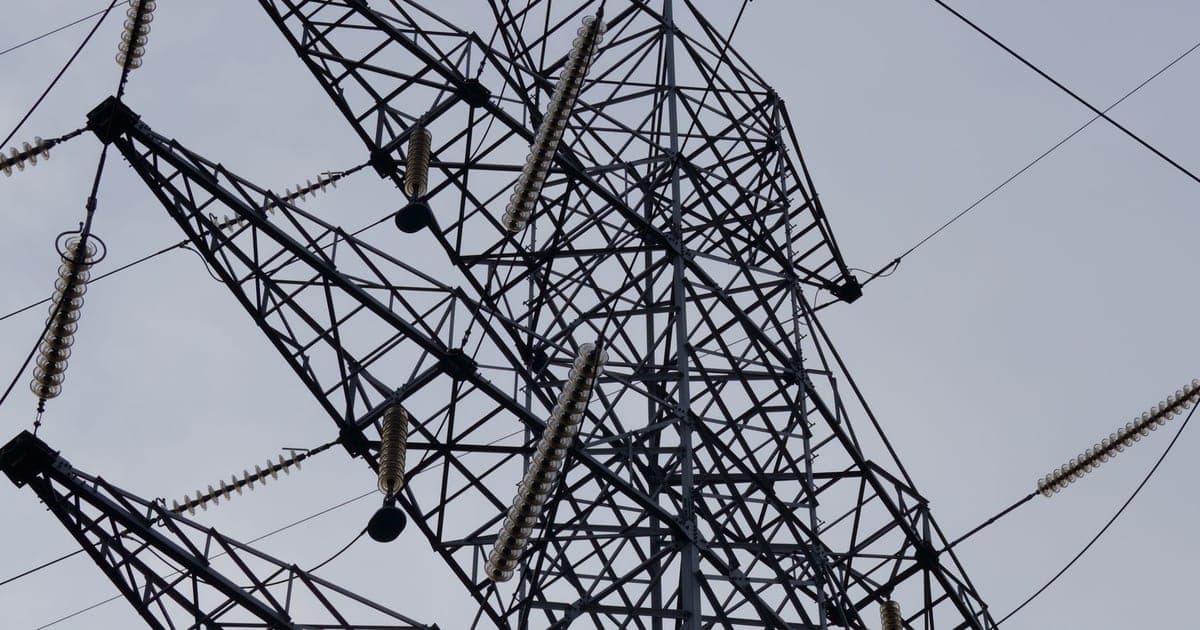
The AI infrastructure story has been told, for about three years, as a capital expenditure story: how many billions, how many gigawatts, whose balance sheet. That framing is running out of road. The interesting question has moved from who is building capacity to who pays for the grid it connects to, and that is a question with a household-level answer.
This is a news desk piece rather than a technology one, because the mechanism is regulatory and financial, not technical.
Key takeaways
- Grid capacity, not chips or capital, is now the binding constraint on new datacenter builds in every major market.
- Long-term power purchase agreements lock in supply for operators and shift timing risk onto everyone else.
- Network reinforcement costs are recovered across all connections, which is where households encounter this.
The constraint moved
For most of the last decade the limiting factor on a new datacenter was silicon and capital. Both are now, relatively speaking, available. What is not available is a grid connection on a useful timescale.
Northern Virginia is the clearest case. The largest datacenter cluster on the planet sits in a service territory where the utility has been explicit that new large-load connections face multi-year waits pending transmission buildout. The queue is not first-come-first-served in any meaningful sense — it is a mix of position, deposit and the network operator's reinforcement schedule. A project with capital and no connection date is not a project.
Europe reached the same wall earlier and more bluntly. Ireland's grid operator effectively stopped accepting new Dublin-area datacenter connections; Amsterdam imposed a moratorium and then rezoned around it. Singapore did the same thing years before either, which is worth noting mainly because it demonstrates this is not a peculiarity of Western permitting.
The consequence is that operators have started treating power procurement the way airlines treat fuel: hedged, contracted years ahead, and negotiated as a strategic function rather than an operating cost.
What a power purchase agreement actually does
A corporate power purchase agreement is a long-term contract to buy a generator's output at an agreed price, often for ten to fifteen years. For the operator it converts a volatile input cost into a fixed one. For the generator it makes a project financeable, because a bank will lend against a contracted revenue stream in a way it will not lend against merchant exposure.
Both of those are genuinely useful, and the mechanism has done real work in getting renewable capacity built.
The part that gets less attention: these contracts allocate timing risk. The operator has secured supply at a known price. Someone still has to be exposed to the spread between that price and the market on any given evening — and in practice a share of that exposure sits with the utilities and retailers serving households, because they are the counterparty that cannot contract fifteen years forward.
The socialized cost
Connecting a large load to the grid frequently requires reinforcement well beyond the site: substation upgrades, new circuits, sometimes transmission-level work. The connecting party pays a contribution toward this. It rarely pays all of it, because the reinforced asset serves other users too, and regulators on both sides of the Atlantic have generally taken the view that shared infrastructure should be shared cost.
That is a defensible principle designed for a world where new large loads were factories and towns. Applied to a cluster of datacenters with a single-digit number of ultimate customers, it produces an outcome that is harder to defend: a network upgrade recovered across every connection in the region, including residential ones.
None of this is hidden or improper. It is the existing framework operating as designed, on a load profile it was not designed for.
What to watch
Three things will indicate whether this becomes a live political issue or stays a trade-press one:
- Large-load tariff classes. Several US state commissions are now weighing whether datacenters should sit in their own rate class with their own cost responsibility. Ohio approved something close to this. The direction other states take is the whole story.
- Fixed charge composition. If network costs keep growing as a share of a flat monthly charge, the regressive distribution of that becomes difficult to ignore — a fixed charge is the same dollars for a studio apartment and a large house.
- Behind-the-meter generation. Operators building their own generation on site, including the current wave of nuclear and gas deals, sidestep the queue entirely — and take their contribution to shared network cost with them.
The consumer angle, stated plainly
For a household there is no action to take here. You cannot opt out of network charges and there is no tariff that isolates you from this. The reason to follow it is that it is one of the clearer examples of an infrastructure decision, made on industrial timescales and justified in industrial terms, arriving eventually as a line on a residential bill.
The AI buildout has been discussed almost entirely in terms of what it might produce. Its most reliably measurable effect on most people, for the next few years, will be what it costs to connect.